📖 Source→⚡ Observation·Where the pattern works/Where the pattern breaks·Interpretation ≠ Conclusion

Peeragogy in Practice

Heartbeat

⏱ 5 minPAT

Motivation

This pattern can help project participants stay in touch, and stay motivated.

Context

A number of people have a shared interest, and have connected with each other about it. However, they are not going to spend 24 hours a day, 7 days a week working together, either because they are busy with other things, or because working separately on some tasks is vastly more efficient.

Forces

Differentiation: the time we spend together isn’t all equally meaningful.

Entropy: something needs to hold the project together, or it will fall apart.

Problem

How will the effort be sustained and coordinated sufficiently? How do we know this an active collaboration, and not just a bunch of people milling about? Is there a there, there?

Solution

People seem to naturally gravitate to something with a pulse. /Once a day* (stand-ups), once a week (meetings), or *once a year/ (conferences, festivals) are common variants. When the project is populated by more than just a few people, it’s likely that there will be several Heartbeats, building a sophisticated polyrhythm. A well-running project will feel “like an improvisational jazz ensemble” [1]. Much as the band director may gesture to specific players to invite them to solo or sync up, a project facilitator may craft individual emails to ask someone to lead an activity or invite them to re-engage. Two common rhythm components are weekly synchronous meetings with an open agenda, combined with ad hoc meetings for focused work on A specific project. The precise details will depend on the degree of integration required by the group.

Rationale

The project’s heartbeat is what sustains it. Just as people matter more than code [2], so does the life of the working group matter more than mechanics of the work structure. Indeed, there is an quick way to do a reality check and find the project’s strongest pulse: the activities that sustain a healthy project should sustain us, too (cf. Carrying capacity).

Resolution

Noticing when a new Heartbeat is beginning to emerge is a way to be aware of the shifting priorities in the group, and contributes to further differentiation. This may ultimately be a good source of new patterns. On the other hand, if a specific activity is no longer sustaining the project, stop doing it, much as you would move an out-of-date pattern to the Scrapbook in order to make room for other concerns. The power of the Heartbeat is that the project can be as focused and intensive as it needs to be, working against entropy in the ways that start to be required as time goes by.

Example 1

The yearly in-person gathering, Wikimania, is the most visible example of a Heartbeat for the Wikimedia movement.[fn:1] may run additional in-person get-togethers.[fn:2] Also of note is the twice-yearly call for proposals for individual engagement grants.[fn:3] other shorter cycles. Each day a highly-vetted Featured Article appears on the front page of Wikipedia, and is circulated to a special-purpose mailing list.[fn:4],[fn:5],[fn:6] articles for deletion lasts at least seven days.[fn:7]
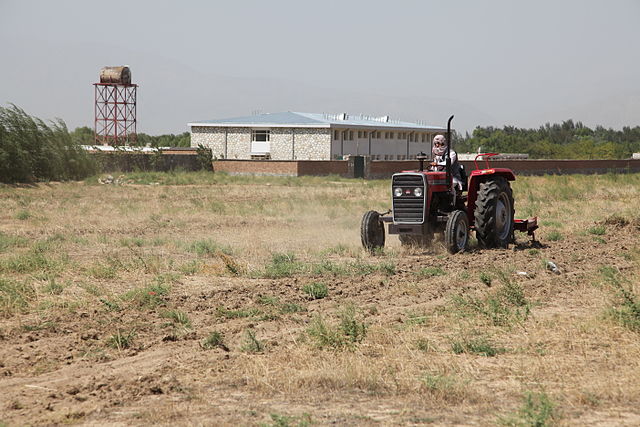
University Farm: al-Biruni University, Kapisa province, Afghanistan.

Example 2

Although it may sound quaint, some variant of the University Farm could help to physically sustain peeragogues, while putting the project’s Heartbeat in tune with that of the seasons. In the current distributed mode, we tend our window boxes and allotment gardens. New developments should unfold in a /logical order growing out of the needs of the community/ [3].

Next Steps

BACK Actual meeting info to be kept up to date on peeragogy.org :website:

  • Central page for upcoming meetings — we have a calendar but needs to be smoke tested, upgraded, made more obvious, etc.
  • Identifying and fostering new Heartbeats and new working groups can help make the community more robust. This is the time dimension of spin-off projects described in Reduce, reuse, recycle.

BACK Schedule the monthly all purpose meeting :website:

  • BUSINESS
  • PROJECT
  • COMMUNITY SYNERGIES

There could be some things that are constant (short things, checkins, PARs)

In principle this could be organised in collaboration with ERG? Which would also suggest something that the ERG can offer.

BACK Book meetings for those who want to show up one weekday morning and one weekend? :website:handbook:

announce on social media

BACK Actual schedule for the course to be determined :course:

BACK Set up the first joint monthly meeting with Howard and Charlotte :website:

  • Can share extra comments on Tools for Thought

References

  1. David M. Dikel, David Kane, and James R. Wilson. 2001. /Software architecture: Organizational principles and patterns/. Pearson Education.

  2. Linus Torvalds and Steven Vaughan-Nichols. 2011. Linus Torvalds’s Lessons on Software Development Management. Input Output. Retrieved from http://web.archive.org/web/20131021211847/http://h30565.www3.hp.com/t5/Feature-Articles/Linus-Torvalds-s-Lessons-on-Software-Development-Management/ba-p/440

  3. Booker T Washington. 1901. Up from slavery. Doubleday & Company, Inc.


[fn:1] https://meta.wikimedia.org/wiki/Wikimania

[fn:2] http://wikiconferenceusa.org/

[fn:3] https://meta.wikimedia.org/wiki/Grants:IEG

[fn:4] https://en.wikipedia.org/wiki/Wikipedia:Today%27s_featured_article

[fn:5] https://en.wikipedia.org/wiki/Wikipedia:Featured_article_candidates

[fn:6] https://lists.wikimedia.org/mailman/listinfo/daily-article-l

[fn:7] https://en.wikipedia.org/wiki/Wikipedia:Articles_for_deletion

⚡ Unpeeragogy · Friction · Observation

Heartbeat Is a Pulse You Must Feel

⏱ 4 minaudit-v2heartbeatrhythmcadence

The Assumption

Regular meetings and check-ins provide rhythm and continuity for peer learning groups, keeping participants connected and projects moving forward through consistent touchpoints. Scheduled interaction creates sustainable collaboration.

Operational Reality

A weekly standup call dies after six weeks. The Slack channel goes quiet. Three people still care about the project, but nobody knows who they are. This happens to every distributed team that mistakes communication for connection — they schedule heartbeats without checking if anyone has a pulse.

Not ritual. Not regular check-ins. Not another meeting where people report what they did yesterday. The heartbeat that actually works is the one you feel when something breaks. When the server goes down and two people jump on a call at midnight. When someone posts a half-formed idea and three others start building on it immediately. When the work itself generates the rhythm.

Most teams engineer their heartbeat backwards. They create the meeting first, then hope motivation follows. But motivation does not respond to calendar invites.

OpenStreetMap shows that heartbeat works when backed by authority, not scheduling. Fedora demonstrates that decision-making authority creates pulse more reliably than calendar invites. WebAssembly shows that heartbeat without authority creates rhythm without substance. Drupal shows that sustainable heartbeat requires governance design, not meeting scheduling.

Perturbatore: “What if meetings without authority are just expensive group therapy sessions — and the strongest heartbeat is the one that skips a beat, the irregular pulse of people who only connect when they actually need each other?”

Empirical Evidence

Resilience Cases (Confirming):

  • OpenStreetMap Data Working Group — Formal dispute resolution bodies with binding authority and published reasoning resolve peer production conflicts that informal consensus cannot. Heartbeat works when backed by authority, not scheduling.
  • Fedora Engineering Steering Committee (FESCo) — Elected technical steering committees with defined scope and transparent records provide sustainable peer governance. Decision-making authority creates pulse more reliably than calendar invites.

Fracture Cases (Complicating):

  • WebAssembly Community Group — Choosing lighter governance models for standards development trades authority for speed, creating different failure modes. Heartbeat without authority creates rhythm without substance.
  • Drupal Governance — Intentional governance transition from BDFL to community model required years of structural work. Sustainable heartbeat requires governance design, not meeting scheduling.

Operational Heuristics

Positive Boundary: Apply this pattern when regular meetings are supported by formal dispute resolution mechanisms and defined decision-making authority — authority creates pulse; the calendar does not.

Negative Boundary: Do not apply this pattern when the group faces contested decisions or resource conflicts without formal authority structures — trading authority for speed creates meetings without substance.

Epistemic Synthesis

The evidence suggests sustainable heartbeat emerges from shared stakes, not shared calendars. The technical committees that function are not the ones with more meetings — they are the ones where members feel responsible for outcomes they cannot achieve alone. Authority creates pulse. Responsibility creates rhythm. The useful friction might be accepting that some collaborations do not deserve to survive their first missed meeting.

Perturbatore: “What if meetings without authority are just expensive group therapy sessions — and the strongest heartbeat is the one that skips a beat, the irregular pulse of people who only connect when they actually need each other?”

The best meeting is the one that never needed to be scheduled.

Evidence Status

Status Count
Confirmed cases 2
Cases under study 0
Unverified cases 0
Ambiguous cases 0

Traceability

Run: audit-v2 · Delta: 1.4 → 1.4337 (±0.0338) · Diversity D: 2

References

💬 Field Report: Heartbeat Is a Pulse You Must Feel

Every pattern in the Handbook has been tested in the real world — and the real world usually has something to say about it. If you tried something similar, or saw it fail differently, share the story here.

Write in your native language — the browser will translate. Lowering the entry barrier is more important than choosing the "right" language. GitHub translates threads automatically so everyone can follow along.
Read how evidence is collected →

What happens after I share my story?

1. Your post appears in GitHub Discussions in the Field reports category.

2. Once a week, the project reads new threads and checks for patterns worth integrating.

3. If your story reveals a new Failure Vector, a revision to tension_index, or a sharper edge for the Perturbator — the entry gets updated.

4. The change is logged at /log and goes live on the next deploy.

Don't have a GitHub account? Here's how it works

GitHub Discussions is free. You need a GitHub account (30 seconds to create one).

Once you're signed in, click "Share your story" above. Write in your own language — the thread will be translated for everyone else automatically.

You don't need to know how to code. You don't need to know what "git" is. You just need an observation that the theory didn't match reality.

What are GitHub Discussions? →

Every pattern raises more questions than it answers.
Read the theory. Then look at what happened.